
by Gareth | Nov 26, 2022 | Social Enterprises
New statistics show that there has been a significant increase in the number and income of social enterprises and co-operatives in Plymouth over the last three years despite the COVID pandemic and difficult prevailing economic circumstances.
Plymouth Social Enterprise Network has been gathering information on social enterprises and co-operatives in partnership with the Co-op Group over the last six months. We have found that there are now around 250 social enterprises and co-operatives in the city – up twenty five percent from 200 in 2019. The data also shows that these businesses collectively bring in an annual income of nearly £700 million – an increase of twenty percent on the 2019 figures – and they employ around 9,500 people in the city.
It seems likely that this increase has been stimulated by good business advice and significant investment from a range of sources over the last few years. This includes investment from the European Union, Rank Foundation, Power to Change, Esmee Fairbairn Foundation and Plymouth City Council. Programmes like STARTSocial, Enhance Social Enterprise Scheme, POP ideas, the Rank Trade-Up programme and Power to Change’s Empowering Places project have all contributed. Alongside this sits a growing desire from entrepreneurs to start and run more ethical businesses. Our view is that, with the climate crisis continuing, enduring poverty and structural inequalities around race and gender particularly, these businesses are needed more than ever.
Jo Higson, Member Pioneer Co-ordinator Plymouth Co-op Group, said: “The Co-op Group is delighted to be part of such a vibrant and diverse social enterprise movement in Plymouth. We are proud that our shops support numerous good causes and social businesses in the city.”
The economic impact statistics only paint some of the picture. We know that social enterprises and co-operatives are far more likely to be led by woman and be paying the Real Living Wage to their employees. We’ve found that nearly 60% of social enterprises have women in leadership positions compared to around 16% of standard businesses. Also, nearly two thirds of social enterprises in Plymouth pay Living Wages compared to around 33% of standard businesses. With national research showing that social enterprises in the South West are more likely to be addressing the climate emergency, this data goes a long to show that, if you invest in social enterprise development and support, you will help build a greener and fairer economy.
Gareth Hart, PSEN Director, said: “Social enterprise and co-operative approaches to business keep growing in the city. Plymouth has been ahead of the curve for a number of years when it comes to social enterprise development and we think that it is great to see growth in businesses that put people and planet first.”
The Co-op Group is one of the world’s largest consumer co-operatives, owned by millions of members. They are the UK’s fifth biggest food retailer with more than 2,500 local, convenience and medium-sized stores. They employ nearly 70,000 people and are a recognized leader for their social goals and community-led programmes. The Co-op Group has its origins in the co-operative consumer societies started by the Rochdale Pioneers in 1844.

by Gareth | Sep 17, 2021 | Social Enterprises
A lot of Plymouth Social Enterprise Network’s activities happen in the ‘foreground’ like our fabulous annual Social Enterprise City Festival; the content we share with over 7,000 subscribers across our platforms; our regular network meetings; our research in to the state of social enterprise in Plymouth; and much more.
BUT we also do a lot of work in the ‘background’ and we think this is no less impactful – it is long-term and about advocating for social enterprise and building an ecosystem for a better future. So we wanted to say a little bit more about this representation, strategic, policy and advocacy work and what impact it has had, is having and will have for our members and Plymouth’s economy more broadly. We think this is important strategic work for our city and our social enterprises. If you want to find out more please get in touch. See below or click here for a summary: PSEN Impact
| Activity |
Impact |
| Representation on Resurgam Plymouth plans especially on inclusive economy, Resurgam Charter, Plymouth Growth Board and at Spend4Plymouth strategic planning with Plymouth City Council (PCC) |
· Inclusive economics embedded in local strategies
· Social Value in procurement enhanced – leads to more opportunities for Plymouth’s social enterprises
· More awareness of Plymouth’s social enterprise sector |
| Advocacy for social enterprise specific business advice with partners such as PCC, HOTSW LEP, Devon County Council. |
· Business advice programme via PCC for start-up social enterprises secured
· Groundwork laid for social enterprise advice in Shared Prosperity Fund in 2022 |
| Advocacy with funders and investors such as Rank Foundation, Power to Change, Community Renewal Fund, Community Ownership Fund, Shared Prosperity Fund, Resonance, PCC and via the Plymouth Partners and Funders Forum |
· More investment in Plymouth social enterprises = over £8.5 million over eight years
· Rank Foundation announced a three-year investment worth over £1 million for Plymouth’s social enterprises.
· Issues relating to social investment raised will lead to better deals in future
· Plymouth projects in pipeline for national funding |
| Representation at Heart of the South West Local Enterprise Partnership (HOTSW LEP) Inclusive Growth Panel |
· Inclusive economics embedded in strategies
· Greater awareness of Plymouth’s social enterprise sector regionally |
| Partnership with Social Enterprise UK especially around Community Entrepreneurship Zones (CEZ), Social Enterprise Places. Speaking at All Party Parliamentary Group on Social Enterprise and supporting SEUK with their research and policy work |
· Plymouth a case study in CEZ proposal to national government – potential for us to be a zone and attract more support and investment
· More awareness of Plymouth’s social enterprise sector nationally |
| Advocacy and partnerships with University of Plymouth, Marjon, City College Plymouth and Plymouth College of Art on issues such as civic university, virtual internships, knowledge exchange programme and on student experiences/teaching and other events |
· Internships delivered for Plymouth social enterprises
· Social enterprise concepts more embedded in University of Plymouth courses
· Opportunities for Plymouth social enterprises through City College European programme
· More awareness of Plymouth’s social enterprise sector |
| Responding to consultations/strategies such as PCC’s environment plans, Social Investment Tax Relief (SITR), Plymouth Culture Plan, PCC economic policy and strategy, HOTSW LEP Industrial Strategy and via Social Investment Commission |
· SITR extended in national budget
· Social enterprise flagged in Plymouth Culture Plan as opportunity for future
· Social enterprise concepts and inclusive growth embedded in local and regional strategies
· Issues relating to social investment raised will lead to better deals in future |
| Ongoing work with local partners such as with POP on SIMPL project, with RIO on State of Us events, information sharing with Chamber of Commerce/FSB and others, EU application with City College |
· Social enterprise concepts embedded in events
· Better partnerships leads to more opportunities for Plymouth’s social enterprises
· More awareness of Plymouth’s social enterprise sector
· EU funding secured – project will provide opportunities for social enterprises in Plymouth |
| Attendance and speaking at international social enterprise events such as Social Enterprise World Forum, Estonia national event and ongoing contact and work with SEUK and British Council |
· More awareness of Plymouth’s social enterprise sector internationally
· Keeps spotlight on Plymouth and will provide opportunities for social enterprises in future |

by Gareth | Dec 3, 2020 | Social Enterprises
Gareth Hart, Director of PSEN, reflects on another week of social enterprise events and several ‘firsts’
“Well delivered, practical, really helpful, brought clarity to my thinking, directly relevant to my job. Great timing!” Festival attendee
Two weeks ago, we held annual Plymouth Social Enterprise City Festival. It was our eleventh event and for the first time it was held entirely online. Now that the dust has settled after a hectic week, I wanted to reflect on the event this year.
The week is part of Global Entrepreneurship Week and across the world this is a chance for social enterprises to raise the profile of their work but also to reflect on what kind of economy, society and businesses do we want.
We hosted twenty-two events covering issues from health and the economy; proving, sharing and writing about your impact; working with young people; making a difference to your community; working digitally; engaging with schools and much more! There was even a social enterprise tropical bingo night hosted by Nudge Community Builders – surely a WORLD FIRST!
We were as ever blown away by the time and energy PSEN’s members put in to helping us curate this celebration of all things social enterprise in the city. We are already looking forward to 2021’s festival. Hopefully, we’ll be able to do more face-to-face events, although digital delivery has certainly increased our reach and encouraged a different type of access. Also huge thanks to all our sponsors and supporters this year. Without you we couldn’t put this on.
The feedback from the festival has been very positive too. No-one said that the online format stopped them attending and 65% of people liked or even preferred the virtual delivery of events. 100% of attendees said that the festival was a good thing for Plymouth’s business community. Suggestions for the future included advertising more and earlier, sharing with students and graduates and seeking more national and international speakers. Quotes included:
“Shows the diversity and encourages a supportive network.”
“It is a great way to celebrate, highlight and illuminate Plymouth’s social enterprise scene”
“It was so powerful hearing about how other people are in similar positions to me and feel the same way.”
A bit of history
We held the first festival in 2010 – a small event in Plymouth University – where we elected the first members of PSEN. I’ve attended all of them. The Social Enterprise City festival has its origins in work undertaken in 2009/10 to look at whether there was a need for a social enterprise network in Plymouth. This research suggested there was a need for such a network. One of the early activities was to celebrate what was already going on in the sector as, at that time, there was very low awareness of social enterprise in the city. Over the years the event has grown from half a day to a day to week to two weeks and gone back to a week.
In 2012, I wrote a piece for the Guardian on why we were running the festival. I recently re-read this and found a lot of what I said then – as we were emerging from the 2008/9 financial crash – resonates now.
I said: “A key aim for us is to push social enterprise into the spotlight and make it central to the way the city does business. I think we need to make sure that social enterprise is understood by a wider range of people and captures the general public’s imagination. We want it to be the model of choice when setting up a business. There is more awareness than ever of the need for new economic concepts, fresh ideas and a fundamental shift in the way we do business. This is high on the political, economic and academic agenda. If we do not radically rethink our business models we will continue to recreate the same problems in the future. We want this festival to show that social enterprise can be the solution to the current economic and environmental crisis. That we can generate wealth sustainably, create meaningful and well-paid jobs and tackle some of society’s most intractable problems.”
The recent Covid-19 crisis has shown us that many of the same issues exist and we still need to re-think our economy to ensure we tackle all these issues more effectively. This is what the festival showed us: that that a better way of doing business is not a work of fiction. It is real; right here and now and it is growing. We need to continue that trajectory. We look forward to another decade of social enterprise festivals.
Some more quotes from attendees:
“Lots of interesting discussion and good attendance. Lots of questions and great panel.”
“It was so productive and useful! I’m going to wave my draft impact report at a lot of other organisations!”
“Engaging and great sense of community, well facilitated creating a safe space for sharing.”
“Great to hear about what is happening on the cutting edge from a well connected speaker.”
“The festival renewed enthusiasm after lots of time stuck at home, connected with other social entrepreneurs.”
“I have got a much better understanding of what social enterprise is.”
“Made me feel connected, motivated again and inspired. Thank you :)”

by Gareth | Dec 2, 2020 | Social Enterprises
Last week we launched an ambitious five-year plan for social enterprise in Plymouth. Why did we do this and why now?
Plymouth Social Enterprise Network (PSEN) believes that developing social enterprises is a fundamental way to help Plymouth become a better city to live and work in. Indeed, we feel confident in saying that Plymouth is already a better city because of the great work of our social enterprises, co-operatives and community businesses.
The social economy is leading the way in showing how businesses can create value for communities, individuals and in the protection of our natural world. Many of the social enterprises doing this in Plymouth are highlighted in the strategy.
But we think we can go further. We face serious social, economic and environmental problems in Plymouth and the wider world. These have been brought into sharp focus by the Covid-19 crisis. We must learn from these challenges and build back better. Simply put we need a greener, fairer economy.
We recognise that the current emergencies we are facing – such as climate crisis, inequality, poor mental health, racism and enduring poverty – are symptoms of the way that we organise our world and, particularly, our economy. The Covid-19 pandemic has shown us that we need to re-think our economy to ensure we tackle all these issues more effectively. This includes re-imagining the role that businesses play in our economy and society.
We want to see a city where:
- Businesses are good for people and planet
- People with good ideas are supported to put them into practice
- Business ownership and wealth and power is widely shared
- Social enterprise is central to the way we do business
- There are a variety of social enterprise models such as co-ops, community businesses, Community Interest Companies and more
- Social enterprise is understood and people think of it as the model of choice when setting up a business
- Social enterprises have access to the very best business advice and investment.
Our strategy sets out a wide ranging and bold five-year vision for social enterprise in Plymouth. And for us social enterprise means co-operatives, community businesses, trading charities, community interest companies and more. If, as a city, we deliver on this strategy we think we can go a long way to delivering the vision above.
Our strategy is developed on strong foundations. In 2013 Plymouth became the UK’s first Social Enterprise City. That award – from Social Enterprise UK – recognised the scope, depth and activities of the social enterprise community in the city. The Social Enterprise City ‘badge’ has led to investment and business advice schemes; it has raised awareness of this type of business and has helped social enterprise become better understood and respected in Plymouth. But there is much more to do.
Social enterprises need great business advice, increased access to finance and markets and courageous institutional policies that enable and support. We need to stimulate start-ups, raise awareness with the general public and work in schools to inspire young minds and show that social enterprise is the past, present and future. We need to build a movement for social change through business.
The strategy builds on research we conducted with social enterprises in Plymouth in 2019 and 2020. It has been developed in partnership with a range of partners in the public and private sector and with social enterprises themselves.
Over the previous five years social enterprise has grown in our city. There are more of them. They employ more people. They work in the most disadvantaged areas of Plymouth and bring in more, much needed income to the city’s communities. But going beyond that; the last five years has shown that a better way of doing business is not a work of fiction. It is real; right here and now and it is growing. We need to continue that trajectory for the next five years.
PSEN cannot do this alone. We already work in partnership with the organizations named in the strategy and we need them and others to be bold and ambitious in creating a better world.
So, join us. Help us deliver this work and this vision over the next five years. We believe we can, collectively, create a prosperous economy for all that tackles deep-rooted social and environmental problems.

by Gareth | Nov 30, 2020 | Social Enterprises
Last week we attended three important meetings and promoted Plymouth’s social enterprises.
The first was Plymouth Resurgam Growth Board. At this meeting we heard from Public Health about the latest on Covid-19 in the city and how plans to build back better with a greener and fairer economy are progressing. We presented the new strategy for social enterprise in the city. The strategy was well received and the board was particularly interested in the social value and supply chain elements of the strategy.
We then attended the national SEUK Social Enterprise Futures conference and took part in important debates about government policy and the future of social enterprise. There were great speeches from:
Paul Polman (ex-Unilever CEO) who said: “Social enterprises shouldn’t just be at the table, they should OWN the table!”
Kate Raworth (Doughnut Economics) who talked about the need for businesses to have more “living purpose, going beyond themselves” and the importance of ownership and finance.
Gordon Brown (ex-PM!) who said: ”There is no route the future that does not have social enterprise at its centre”.
June O’Sullivan (CEO, London Early Years Foundation) who wanted to see a: “high street of social enterprises”.
Finally, we took part in the Spend4Plymouth round table meeting – exploring how we can get Plymothians to spend more with Plymouth’s business and particularly our great social enterprises. This work ties in with elements of the social enterprise strategy for Plymouth.

by Gareth | Nov 16, 2020 | Social Enterprises
Plymouth Social Enterprise Network (PSEN) has today launched a Social Enterprise Strategy – a five-year plan to boost Plymouth’s social enterprises and help create a greener, fairer economy. The plan also aims to retain and build on Plymouth’s reputation as the UK’s leading social enterprise city.
PSEN Board Member, Gareth Hart, said: “We want to build upon our achievements so far, develop these and go into whole new areas such as technology and digital. Social enterprise seems to answer many of the questions being raised as people look towards a post-Covid society.
“This strategy is full of examples of Plymouth’s great social enterprises and shows how businesses can create value for communities and individuals, making our city and the wider world a better place to live and work in.”
The five priorities highlighted in the strategy are based on two years of consultation and development and are underpinned by the belief that a prosperous economy can also support a community, tackling deep-rooted social and environmental problems.
Plymouth became one of the UK’s first Social Enterprise Cities in 2013, recognizing the scope, depth, and activities of the social enterprise community in the city. Since then, there has been a significant international interest with people from Sweden, South Africa, Jamaica, Italy and others visiting Plymouth to find out more about our success. The five year plan will help to ensure that the city retains its place as the UK’s leading social enterprise city.
Gareth continued: “Social enterprise has become better understood and respected in Plymouth, but there is more to do. Social enterprises need more support, the general public need to be made more aware of what they can achieve and young people need to be inspired if we want a more compassionate, fairer, more diverse and more environmentally sustainable society.”
The strategy priorities include boosting business advice and access to finance for social enterprise; stimulating social entrepreneurship and start-ups; building more markets for social enterprises and developing more policy and advocacy work to promote social enterprise. The priorities will be reviewed regularly by PSEN and their partners to assess emerging themes and to make sure the strategy is still addressing the needs of local social enterprise.
The strategy will be launched on Monday 16th November as part of Plymouth’s Social Enterprise City Festival, which consists of over 20 online and in person events on the theme of ‘Educating the Economy.’
Download the strategy here

by Gareth | Nov 14, 2020 | Social Enterprises
COVID-19 is showing us that a health issue can not only devastate the lives of those directly in the path of the virus, but can also close shops and high streets, force hundreds of thousands of businesses to struggle and place millions on furlough or out of work. Never has the fundamental link between health and the economy been more clearly underlined.
Yet there is little in the way of joined up public health and economic policy for the Government to draw on going forward. The economy is steered by policies such as Rishi Sunak’s Winter Economy Plan – which barely mentions health – and the UK’s industrial strategy, published in 2017, which has scant references to the importance of health as a component of the economy.
At a local level, opportunities to link health and the economy – to ensure a healthy, productive workforce – are being missed. Devon and Somerset’s Productivity Plan rarely discusses the health of the workforce, yet the local Clinical Commissioning Groups are co-signatories to the green paper behind this strategy. In comparison, Greater Manchester’s Local Industrial Strategy makes ‘population health’ an explicit aim and cites health over two hundred times.
Does this matter? You could see COVID-19 as an unusual event and argue it is not necessary to go to the lengths of rethinking the relationship between public health and the economy – we can simply develop a vaccine or learn to live with the virus and continue with our lives.
Well it matters because, where health and economic policy are joined up, the social and economic benefits are huge. For instance, mental health hugely affects productivity – how efficiently a business can create a profit. The Centre for Mental Health estimates that poor mental health in the UK workforce costs businesses almost £35 billion a year with an annual cost to the whole UK economy of nearly £100 billion a year. By far the largest share of this is not sick pay, but through employees who are at work but unwell and under-performing – this is known as ‘presenteeism’.
We could take Manchester’s lead and focus more on health and the economy. Mental health provision there is being pioneered as part of employment support. Imagine being unable to work effectively because of mental ill health but knowing that your employer and local authority understands and can offer tailored support.
There are wider economic issues which affect health. These include being in work or not, wage levels, contracts terms and conditions, lack of or low sick pay and other entitlements.
So how could we begin to tackle health and the economy? Government could incentivize health in the workforce through tax reliefs and also legislate to make employment law more health conscious. Local and national authorities could also unleash the power of the billions of pounds of public money they spend by insisting that firms they contract with adopt work-place wellbeing measures.
Employers could pay all staff a proper living wage as a minimum; ending in-work poverty and the ill-effects of inadequate housing and poor nutrition. Employers can aim to offer decent jobs with a sense of purpose and fulfilment, they can reduce zero-hours contracts and improve sick pay. These things are known to protect mental health and wellbeing. Businesses could develop more responsibility with a purpose to tackle social and environmental issues and do so with innovation and creativity.
Sound far-fetched? Well these businesses exist. They are called social enterprises – famous examples include The Eden Project and The Big Issue. These businesses thrive and trade ensuring that the health and wellbeing of their staff and their communities is part of their work. Their ethos is one where the health of everyone is as important as making a profit. Recent research in Plymouth shows that 94% of social enterprises there offer support around health and wellbeing for their staff.
COVID-19 has shown us that things need to change and that health and economic thinking need to become more connected. Social enterprises are twenty years down the track with this and the rest of the world needs to catch up. We need to build back better and understand more deeply that without health there is no economy.
By Lucy Blackley and Gareth Hart, Directors of Iridescent Ideas CIC
by Jess | Jul 13, 2020 | Social Enterprises
There is a war of ideas coming. Already skirmishes are being seen and battle lines are being drawn. On one side we have ‘business as usual’ and corporate interests asking for tax cuts to boost economic recovery – ex-Chancellor of the Exchequer, Sajid Javid, has urged slashing VAT and national insurance to encourage spending – and the government has advocated for radical reforms to planning to aid recovery. Requests for more ‘deregulation’ are sure to follow.
On the other we have a movement suggesting we should ‘Build Back Better’ and take this opportunity to re-think our economy post Covid-19 with a green new deal, investment in public services and enhanced protections for people’s jobs. This fight will be seen in sharp focus on our high streets. As I write, shops are starting to re-open. Proprietors are anxiously waiting to see if they are viable in this post-lockdown world of socially distanced shopping, floor stickers and plastic till barriers.
Even before lockdown the high street was struggling with many big-name retailers closing or desperately re-negotiating rent and rates to try to stay afloat. What will emerge in our city centres over the next few months is guesswork – will people dash to the shops to frenziedly spend? Or will there be a painfully slow return to some kind of new-normal? Or will the high street recover at all, as people realise they can do even more online than they thought possible? Over the last few weeks we’ve seen mega-shopping centre chain Intu, owner of the likes of Lakeside, Essex, The Trafford Centre in Manchester and The Mall at Cribbs Causeway in Bristol, warn of financial troubles. A staggering 80% of retailers are predicted to have missed rental payments this last quarter. Boarded up shops seem more likely in the near future along with significant job losses.
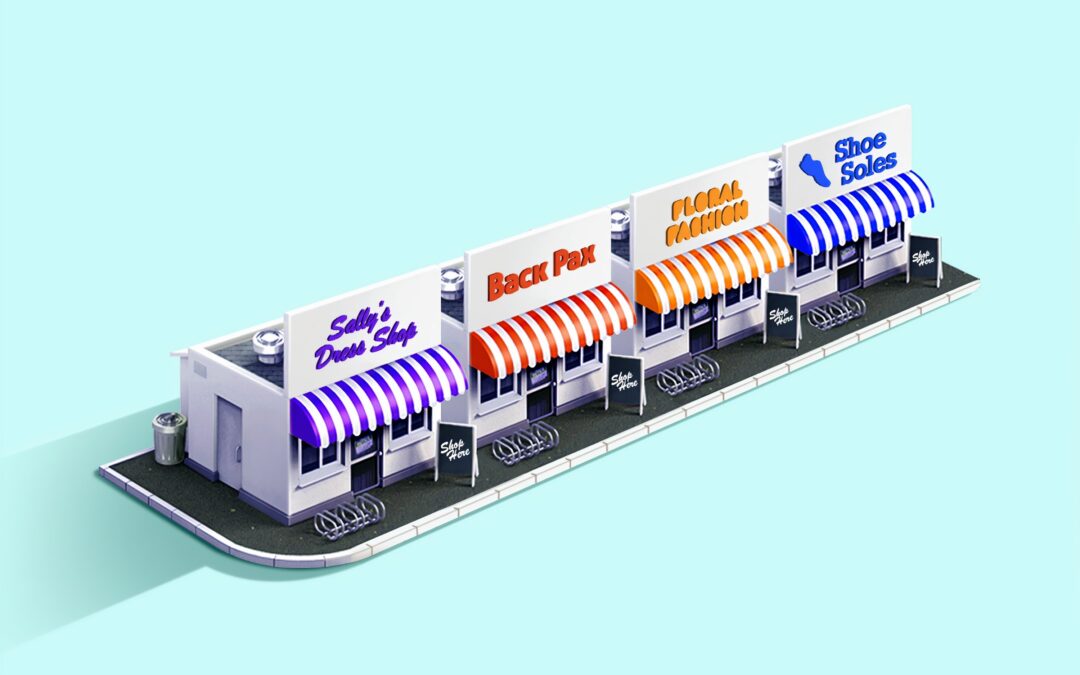
So, what’s to be done: massive tax cuts and de-regulation or investments and policy innovation to invigorate our high street economies? Well one solution could be to stimulate and encourage ‘community businesses’ to take over our shopping districts and lead a kinder, more human-centred, economic recovery. A community business is defined as a firm that is accountable to its local community and one that reinvests its profits to create positive social impact. Examples include community pubs, farms and shops but there are also community owned ferry boats, call centres, theatres, sweet shops, breweries, energy suppliers, libraries and more. There are over 9,000 across the UK and around 1,800 in the South West. Here in Plymouth a well-known example is Nudge Community Builders who took over an old pub and turned it into a thriving community space. Community businesses have proved to be resilient and resourceful during the Covid-19 crisis with many becoming the nerve centres of local community responses and thus they are much less likely to have closed or be empty. Community businesses are also more likely to pay more fairly and deliver returns for local people. How could we stimulate more community business? First, the government could legislate to help put high-street properties directly into community ownership. Second, councils should develop long-term strategies for their high streets. Third, to build more vibrant high streets, the government should support a new wave of local, community and social entrepreneurship. Finally, we should all recognise that it is the businesses on a high street or in a city centre that give these places liveliness and value.
Ed Whitelaw, Head of Regeneration and Enterprise at Real Ideas Organisation, based in Plymouth, is leading a community business start-up programme, funded by Power to Change, in the city. To help develop more community businesses he said: “We have about twenty potential community businesses in the pipeline. They need investment and more support, but ownership of assets is key. We need to see more assets in the community’s hands rather than owned by distant landlords. Money then generated in these assets will stay in the local community and recirculate to do more good. Communities then have power, control and more influence.”
The things we value the most are often hardest to measure – love, community, health, nature. If nothing else the Covid-19 crisis has shown us these are more important than the economy. Covid-19 has also shown us that, far from there being no such thing as society, community spirit lives on in abundance. We need jobs of course and that’s where community business can help. Amy Cooper, Programme Co-ordinator at Real Ideas Organisation, who works with Ed supporting community businesses said: “People want purpose and meaning in their work and home lives. We want to earn a good living and also to feel we belong. This is the great offer of community business.”
We need an economy that is better for people and better for the planet. Going back to business as usual will only compound inequalities and make any economic recovery more fragile. Community businesses can be at the heart of this revival – they are right where we need them to be on the high street and in city centres. If government listens more to communities and not just to corporate interests, we can: build back better.
By Gareth Hart, Director, Iridescent Ideas CIC and Chair, Plymouth Social Enterprise Network. This content was sponsored by Power to Change via the Empowering Places programme managed by Real Ideas Organisation.

by Gareth | Apr 28, 2020 | Social Enterprises
PSEN Coronavirus Response and Recovery FINAL
PSEN has published this plan to help us both respond to the immediate Coronavirus/Covid-19 crisis but also look forward to the recovery phase.
Our simple vision is that our members, social enterprises and indeed all businesses and community groups in the city emerge in a healthy position.
We know that this will be hard. We have had contact with a number of social enterprises that are struggling and some that have closed for the moment. We hope these re-open and recover in due course. We are also hearing of social enterprises that have moved online with relative ease and those that are providing a range of innovative services like Livewell Southwest, Nudge and Real Ideas Organisation.
Response
Some of our key aims during this response phase are to:
- Facilitate the exchange of advice and business support for our members. We have our own resources here and we have worked with Plymouth City Council and Plymouth Octopus Project to create a dedicated page of information on the Council’s website.
- Gather information about the impact of Coronavirus/Covid-19 on our members and advocate for their needs to relevant organizations such as national and local government
- Work with and support SEUK and other social enterprise places on the national response. More information on that here.
More specifically, we have been proactively phoning our members to check in with them. We’ve not called everyone yet so if we’ve not spoken to you let us know. We’ve put our events schedule online. We’ve already held events on using Zoom and on HR advice for social enterprises. Another event lined up is on PR and digital marketing. Other events will be published soon.
We’ve also created a pool of business experts who can provide free business advice on topics such as: tech, Crowdfunding, PR, governance, investment, social impact, finance, team management. communications and more.
We are regularly updating our social media and news feeds with up to date sector news and information too.
Recovery
We want a more pro-social, more inclusive and regenerative economy to emerge post-crisis. Social enterprises need to be at the heart of the recovery and embedded in economic and heath policy making. Without social enterprises a future economy that goes back to ‘business as usual’ will only compound inequalities and make recovery harder. We need a healthy workforce with decent, productive jobs that enhances, not damages, the environment. Social enterprises are delivering this as our recently published research proves.
We are in the early stages of developing the ‘recovery’ phase but our early ideas are to:
- Bring members together to collaboratively inform how we work together as a sector
- Advocate for a more pro-social, inclusive and regenerative economy through online events, blogs and content
- Work in solidarity with other social enterprise networks across the region and the country
- Advocate for social enterprises to be supported and firmly embedded in the recovery with economic policy makers such as Local Enterprise Partnership, City Council, Plymouth Growth Board, University of Plymouth and relevant others.
Please get in touch with us about your immediate needs and ideas for the future recovery.
by Gareth | Apr 28, 2020 | Social Enterprises
Plymouth Social Enterprise Network has published research on the state of social enterprise in our great city. You can read a summary here and the full version here.
We know the power of research. Understanding the state of social enterprise in Plymouth in 2013 led to us becoming the UK’s first Social Enterprise City. That, in turn, led to millions of pounds worth of investment and business advice for our social enterprises.
Now, six years later, this report shows how that city badge and that investment has helped develop social enterprises in Plymouth. There are more of them. They employ more people. They work in the most disadvantaged areas and bring in more, much needed, income to the city’s communities.
This research shows that, as we rebuild our economy post Coronavirus/Covid-19, social enterprises need to be at the heart of the recovery and embedded in economic and heath policy making. Without social enterprises a future economy that goes back to ‘business as usual’ will only compound inequalities and make recovery harder. We need a healthy workforce with decent, productive jobs that enhances, not damages, the environment. Social enterprises are delivering this as the research proves.
There are some eye-opening findings, clues to the future economy we want and also some business needs for social enterprises that we need to address. For example, did you know that:
- Two of the five largest employers in Plymouth are social enterprises
- The social enterprise community has grown by 33% from 150 to around 200 businesses over the last six years
- Social enterprises employ over 9,000 people and spend nearly £600 million a year in our city’s economy
- Over half of leaders in social enterprises are women
- Nearly two thirds of our social enterprises pay the Real Living Wage to staff compared to a third of FTSE100 companies
- Nearly all our social enterprises offer support around employee well-being in the work-place
But more than just the statistics: this research shows us that a better way of doing business is not a work of fiction. It is real; right here and now in our great city. And it is growing.
We face serious social, economic and environmental problems in Plymouth and the wider world. Post Coronavirus/Covid-19 these problems will be in even more sharp focus. People and planet are not distinct from the economy, they are the economy. This report illustrates that social enterprises in all their forms, be they co-operatives, community businesses, community interest companies, trading charities and more, are creating a more compassionate, fairer, more diverse and more environmentally sustainable society through their work.
Thank you to all who contributed to this report: the researchers and writers, Transform Research Consulting. The funders, Power to Change. And to the social enterprises, members of Plymouth Social Enterprise Network, and others who took part and who demonstrate that you are making the city a better place though your fabulous work.
Let us press for ever more business with good cause in Plymouth in the coming years.

by Gareth | Jan 7, 2020 | Social Enterprises
Happy New Year. I hope you had a great festive break. We are looking forward to an action packed 2020.We have lots of events, activities and announcements to make. All in good time. I wanted to briefly reflect on the last ten years at PSEN and, WOW, what a decade!
Social enterprise in Plymouth – in all its forms of co-operatives, community businesses, trading charities, community interest companies, etc – has advanced so much, in large part due to the dedication of people like you, our members and our partners like Plymouth City Council, POP+, Dartington SSE, Social Enterprise UK, Social Enterprise Mark, The Chamber of Commerce and the LEP to name but a few. What a collective of brilliant people and organizations. I think its fair to say Plymouth Social Enterprise Network has played a key role too.
I’m proud of what we’ve collectively achieved as a city since PSEN started in 2010:
1. First UK Social Enterprise City (first in world maybe!)
2. The UK’s best week-long social enterprise festival
3. A leading social enterprise place which people across the world look to (folk from Sweden, Italy, South Africa, The Netherlands, Germany, Lithuania, Spain, Greece, Jamaica, Finland, Poland have all been here to find out more)
4. A seat on the Plymouth Growth Board – helping to keep social enterprise at the heart of economic policy making
5. The City Council’s pioneering Social Enterprise Investment Fund and Co-operative Development Fund.
6. Power to Change and Rank Foundation investment and support
7. School for Social Entrepreneurs running multiple programmes here
8. Specialist expert social enterprise business advice programmes secured
9. Climate emergency declared
10. Developing the inclusive economy work
11. Influencing policies for social value in procurement
12. Three universities inspired to embrace social enterprise as a model
13. One of the largest health and social care providers (Livewell) in the UK started here
These are just some of the highlights, I’ve probably missed many more. Thanks to all who have served on the PSEN board over the years to help achieve this.
Where will the next decade take us? We want social enterprise to be central to the way we do business in Plymouth; a leading place for social enterprise start-up and development; a place where social enterprise is thought of as a model of choice for new entrepreneurs. We are building on good foundations but there is much more to do. Our pressing issue is to develop a new social enterprise strategy for the city. Work on this is well underway and will build on the research into social enterprise in Plymouth conducted last year. We can only achieve all this with the support of our fabulous members. A network is nothing otherwise. Please join us if you haven’t already. I look forward to hearing from you.
by Jess | Nov 6, 2018 | Social Enterprises
PSEN Director Annette Dhami attended the POP+ Conference earlier in the year and talked about how PSEN founders came together to launch the network, and what this action has gone on to create.
It went back 8 years.
Michelle Virgo from Dartington School for Social Entrepreneurs, Dave Kilroy from Social Enterprise Outcomes, Ed Whitelaw from Real Ideas Organisation and Gareth Hart from Iridescent Ideas CIC sat around a kitchen table on a windy autumn afternoon over coffee. One year before, a research study had been done to see whether Plymouth’s growing social enterprise sector would benefit from a network that could support it. The study found that it could. In 2010 an event was run to discuss getting one started, but representation from the social enterprise community itself was low, and the ball didn’t start rolling. Without Plymouth social enterprises taking the lead, another organization from Exeter was awarded a pot of funding to try to get it going, but – not being based in Plymouth – traction didn’t take, and when their contract ended so did the activities.
Over coffee, Michelle, Gareth, Dave and Ed had a question to discuss: did they, representing their various social enterprises, feel that they could get a Social Enterprise Network for Plymouth going? And where on earth would they start?
They knew that there were things on their side: they were all passionate about social enterprise and the type of inclusive and sustainable economy that it could help to build in Plymouth. They were all committed and willing to chip in. They represented social enterprises in Plymouth, so who better to do it? They decided to try.
Plymouth Social Enterprise Network was formally constituted in May 2011 and began its work by arranging regular meetings of 10-20 people. Learning quickly, a Board of Directors was soon set up to change the focus of these meeting from ‘how do we run a network’ (now done by the smaller voluntary board) to ‘these are the great things are happening in Plymouth and let’s celebrate them’ (with growing participants to do so). Before long, they secured funding to run a large conference – now run as the annual Social Enterprise Festival – and launched the first directory of social enterprises in Plymouth. They conducted research into the state of social enterprise in Plymouth, and started to reveal information about how important the sector was becoming. As this was being published, Plymouth University announced itself as a social enterprise, adding even more weight to the sector. £500 million income and 6,000 jobs were identified from the sector in Plymouth, securing coverage from national press.
They ran an event asking: ‘Social Enterprise City: What, Why and How?’, wondering what it would mean to be a city that champions social enterprise approaches. National speakers became to attend events, recognising the buzz in Plymouth. They began to organise bigger conferences, including the next social enterprise festival, this time a week long.
In 2013 Social Enterprise UK launched their Social Enterprise Places badge, looking for hotspots of activity in the country where social enterprise was thriving. With all the work done in previous years, PSEN was able to quickly evidence the case for Plymouth and over a few days worked to pull together a bid. It was successful, and in September 2013 Plymouth was announced – along with Bristol – as the first Social Enterprise City in the UK. Plymouth was put on the national map as a go-to place for social enterprise, and international universities, major funders and large organisations started to travel to Plymouth to find out more.
In the last five years PSEN has leveraged this opportunity to develop the support for Plymouth’s social enterprises further. It launched a paid membership model, to ensure that trading income was at the heart of its work and that the network would be financially accountable to social enterprises in the city. PSEN Board members began to be invited to influence governmental policy, sitting on the Plymouth Growth Board and the Plymouth Inclusive Growth Flagship; at the Local Enterprise Partnership level; and working with Social Enterprise UK, national government and other powerful players to champion social enterprise as a way to create a more inclusive and sustainable economy.
Between 2013-2015 PSEN ran even bigger social enterprise festivals, with – for example – over 2,000 people attending over the course of two weeks.
By lobbying for support and raising awareness increasing funding was secured to support social enterprises in Plymouth. Power to Change, the Seedbed Incubator Programme, Esmee Fairbairn, The Rank Foundation and Plymouth City Council are among the supporters that have funnelled over £6 million of finance and support into social enterprise support as a result.
With support for social enterprise growing, social enterprise is increasing its contribution and influence in the Plymouth economy. Progress has been notable, but there is more work to do. We want to see an economy with social businesses not at its periphery but at its core. Whilst we continue to be run by passionate and committed people representing a range of social enterprises in Plymouth, we will continue to try.
Come join us for the 2018 Social Enterprise Festival to learn more about the exciting things happening in social enterprise in Plymouth and ways to be involve.

by Jess | Sep 14, 2018 | Uncategorised
Last week we were please to be invited to join The ‘Social and Creative City Economy of the Future Roundtable’ discussion facilitated by Social Enterprise UK and the British Council.
As the first Social Enterprise City in the UK we understandably have a lot of thoughts and expectations around the future of a city and what it should look like. Developing ideas around those concepts is core to our decision making and the development of the network. We know that Plymouth is making huge leaps and doing incredible work, we spend a lot of time travelling around events and discussions just like this talking about Plymouth’s example. We go armed with statistics, data, and plenty of passion, ready to explain what we do to anyone who will listen. So when we introduce ourselves and find that we are instantly greeted by national representatives and vision makers from industry with not only recognition, but praise and excitement… we know that we are in the right room.
The event was hosted and facilitated by The British Council and Social Enterprise UK. The primary task being to explore a collective vision for the UK’s urban social and creative economies in 20 years time. Passionate advocates of social change and participants from numerous socially enterprising organisations from across the country filled the tables and workshop spaces. It was an inspiring place to be.
This was all set in the context of the fact that cities generate 80% of Global GDP, but are facing huge challenges around meeting the UN Sustainable Development Goals (SDGs). If you’re not familiar with the SDG’s, They are the blueprint laid out by the United Nations to achieve a better and more sustainable future for all. They address the global challenges we face, including those related to poverty, inequality, climate, environmental degradation, prosperity, and peace and justice. They are a powerful and creative vision of how society should function by 2030. You can read more about them here. The outputs of this round table event will help to inform the Global Parliament of Mayors Annual Summit which is taking part in Bristol in October.
One of the points that came from discussions and stuck with us was The issue of the creative industries being easier to conceptualise and communicate than social enterprise and the social economy. There was a recognition of the challenges this can present when trying to persuade Local Authorities to procure more goods and services from social enterprises. This lack of comprehension of social enterprise is something that we’ll be addressing at events in the Social Enterprise City Festival in November, if you have thoughts or want to hold an event to look at that in your sector then get in touch.

by Gareth | Jul 18, 2018 | Uncategorised
We need to talk about anarchism. Once you get past the often misleading, negative, bomb-chucking stereotypes of the proceeding centuries, many of the ideas contained within the, by definition, very broad church of anarchist thought are quite sensible. Indeed, in many cases emphasizing balance and moderation. They also have the potential to provide at least part of the answer to society’s infinitely complex growing list of challenges, from political disenfranchisement to growing inequalities, aging populations, environmental degradation and shrinking public services.
(more…)
