
by Gareth | Nov 26, 2022 | Social Enterprises
New statistics show that there has been a significant increase in the number and income of social enterprises and co-operatives in Plymouth over the last three years despite the COVID pandemic and difficult prevailing economic circumstances.
Plymouth Social Enterprise Network has been gathering information on social enterprises and co-operatives in partnership with the Co-op Group over the last six months. We have found that there are now around 250 social enterprises and co-operatives in the city – up twenty five percent from 200 in 2019. The data also shows that these businesses collectively bring in an annual income of nearly £700 million – an increase of twenty percent on the 2019 figures – and they employ around 9,500 people in the city.
It seems likely that this increase has been stimulated by good business advice and significant investment from a range of sources over the last few years. This includes investment from the European Union, Rank Foundation, Power to Change, Esmee Fairbairn Foundation and Plymouth City Council. Programmes like STARTSocial, Enhance Social Enterprise Scheme, POP ideas, the Rank Trade-Up programme and Power to Change’s Empowering Places project have all contributed. Alongside this sits a growing desire from entrepreneurs to start and run more ethical businesses. Our view is that, with the climate crisis continuing, enduring poverty and structural inequalities around race and gender particularly, these businesses are needed more than ever.
Jo Higson, Member Pioneer Co-ordinator Plymouth Co-op Group, said: “The Co-op Group is delighted to be part of such a vibrant and diverse social enterprise movement in Plymouth. We are proud that our shops support numerous good causes and social businesses in the city.”
The economic impact statistics only paint some of the picture. We know that social enterprises and co-operatives are far more likely to be led by woman and be paying the Real Living Wage to their employees. We’ve found that nearly 60% of social enterprises have women in leadership positions compared to around 16% of standard businesses. Also, nearly two thirds of social enterprises in Plymouth pay Living Wages compared to around 33% of standard businesses. With national research showing that social enterprises in the South West are more likely to be addressing the climate emergency, this data goes a long to show that, if you invest in social enterprise development and support, you will help build a greener and fairer economy.
Gareth Hart, PSEN Director, said: “Social enterprise and co-operative approaches to business keep growing in the city. Plymouth has been ahead of the curve for a number of years when it comes to social enterprise development and we think that it is great to see growth in businesses that put people and planet first.”
The Co-op Group is one of the world’s largest consumer co-operatives, owned by millions of members. They are the UK’s fifth biggest food retailer with more than 2,500 local, convenience and medium-sized stores. They employ nearly 70,000 people and are a recognized leader for their social goals and community-led programmes. The Co-op Group has its origins in the co-operative consumer societies started by the Rochdale Pioneers in 1844.
by Jess | Jul 23, 2021 | Social Enterprises
Meeting the challenge
it’s now almost impossible to avoid the impacts of climate change. Everything from extreme weather to rising sea levels, changes in biodiversity and health risks will have an impact on business in one way or another so many have taken to calculating their carbon footprint with the aim of doing something positive about reducing their emissions.
But what about the bigger picture ? What do we do about the city as a whole ? What can we use as a baseline for action and how can that inform the targets we set ourselves ?
Thankfully, there are annually released stats that help.
You’ve got to start somewhere
Back in 2007/08 a series of new environmental indicators required local authorities (and businesses) to report on their local carbon footprint for the first time. There was, however, one slight problem. The emissions information needed for this complex calculation was almost non-existent and, according to the energy companies, was subject to commercial confidentiality. So the Government stepped in with some new rules on reporting and, with a baseline of 2005, the national local authority and regional carbon dioxide emission statistics have been available every year since.
Since then they have proved very useful in setting local targets for emission reduction, in tracking progress towards reductions and highlighting the average per capita carbon footprint in each area as well as the regional and national comparisons.
Released on 24th June 2021 the stats for 2005 to 2019 can be found in a range of reports and spreadsheets
So how are we doing ?
We used to have some very simple reduction targets in Plymouth’s Climate Change Strategy…….20% by 2013, 60% by 2020 and 80% by 2050; all carefully calculated to address local action. Unfortunately things aren’t so clear in the current Climate Emergency Action Plan so it is a little more difficult to work out what we need to do to meet the PCEAP target of carbon neutrality by 2030 but at least we have the national stats to compare.
However (brace yourselves…here come the percentages)……the national emissions stats can tell us a lot. It would appear that progress towards an overall reduction in the city’s footprint is slowing as, since 2005, our overall footprint has gone down by 40.94%. It has only reduced by 2.2% since 2018.
The commercial sector fares a little better with an overall reduction of 62.2%; backed by a reduction of 47.1% for the industrial sector. Until recently, these sectors had recorded excellent progress towards reduced emissions so it may be that there is a threshold for the city whereby new reductions become difficult to achieve without considerable change and/or investment.
The domestic sectors and public sectors score 43.5% and 49% respectively. Our Transport sector fared worst with an overall reduction of only 14.45 since 2005.
Our personal carbon footprints have gone down from 5.9 tonnes per capita to 3.3 tpc in 2019. This compares with figures of 4.7 tpc for Devon, 4.6 tpc for the South West as a region and 5.2 tpc for the UK as a whole.
I was asked the other day what an ‘ideal’ personal footprint would be ? I’ve had a look but there doesn’t seem to be an easy answer to this but, compared with the average footprint of 16 tpc in the US, the UK is clearly doing reasonably well. Globally the average per capita carbon footprint is 4.0 tpc….so, at 3.3 tpc, Plymouth’s residents are also making a positive contribution.
Although the latest edition of the stats includes some new information on the values for croplands, grasslands, wetlands and settlements, the figures here are not complete so a comparison against the baseline for 2005 is a little difficult. Nevertheless the spreadsheets still contain a wealth of information…ideal for anyone who loves data and stats !
The figures are always issued with a two year delay so what June 2022 will say about the footprints for 2020 is anyone’s guess. One thing is for sure, there will be a huge dip in some sectors in response to the lockdowns we’ve experienced. We’ll have to wait to see how the levels will rise as we recover, where the new baselines will be set and whether any reduction thresholds might limit what more we can do. If we’re heading for carbon neutrality by 2030 we definitely need to know more about the target figures expected of us but the good news is that Plymouth’s commercial and industrial sectors are already clearly doing their bit.
If you’d like more information on how to reduce your organisations carbon footprint then check out the resources in our Climate Action Toolkit.
Blog Courtesy of Environment Plymouth
Photo by Frederica Diamanta on Unsplash
by Gareth | Dec 3, 2020 | Social Enterprises
Gareth Hart, Director of PSEN, reflects on another week of social enterprise events and several ‘firsts’
“Well delivered, practical, really helpful, brought clarity to my thinking, directly relevant to my job. Great timing!” Festival attendee
Two weeks ago, we held annual Plymouth Social Enterprise City Festival. It was our eleventh event and for the first time it was held entirely online. Now that the dust has settled after a hectic week, I wanted to reflect on the event this year.
The week is part of Global Entrepreneurship Week and across the world this is a chance for social enterprises to raise the profile of their work but also to reflect on what kind of economy, society and businesses do we want.
We hosted twenty-two events covering issues from health and the economy; proving, sharing and writing about your impact; working with young people; making a difference to your community; working digitally; engaging with schools and much more! There was even a social enterprise tropical bingo night hosted by Nudge Community Builders – surely a WORLD FIRST!
We were as ever blown away by the time and energy PSEN’s members put in to helping us curate this celebration of all things social enterprise in the city. We are already looking forward to 2021’s festival. Hopefully, we’ll be able to do more face-to-face events, although digital delivery has certainly increased our reach and encouraged a different type of access. Also huge thanks to all our sponsors and supporters this year. Without you we couldn’t put this on.
The feedback from the festival has been very positive too. No-one said that the online format stopped them attending and 65% of people liked or even preferred the virtual delivery of events. 100% of attendees said that the festival was a good thing for Plymouth’s business community. Suggestions for the future included advertising more and earlier, sharing with students and graduates and seeking more national and international speakers. Quotes included:
“Shows the diversity and encourages a supportive network.”
“It is a great way to celebrate, highlight and illuminate Plymouth’s social enterprise scene”
“It was so powerful hearing about how other people are in similar positions to me and feel the same way.”
A bit of history
We held the first festival in 2010 – a small event in Plymouth University – where we elected the first members of PSEN. I’ve attended all of them. The Social Enterprise City festival has its origins in work undertaken in 2009/10 to look at whether there was a need for a social enterprise network in Plymouth. This research suggested there was a need for such a network. One of the early activities was to celebrate what was already going on in the sector as, at that time, there was very low awareness of social enterprise in the city. Over the years the event has grown from half a day to a day to week to two weeks and gone back to a week.
In 2012, I wrote a piece for the Guardian on why we were running the festival. I recently re-read this and found a lot of what I said then – as we were emerging from the 2008/9 financial crash – resonates now.
I said: “A key aim for us is to push social enterprise into the spotlight and make it central to the way the city does business. I think we need to make sure that social enterprise is understood by a wider range of people and captures the general public’s imagination. We want it to be the model of choice when setting up a business. There is more awareness than ever of the need for new economic concepts, fresh ideas and a fundamental shift in the way we do business. This is high on the political, economic and academic agenda. If we do not radically rethink our business models we will continue to recreate the same problems in the future. We want this festival to show that social enterprise can be the solution to the current economic and environmental crisis. That we can generate wealth sustainably, create meaningful and well-paid jobs and tackle some of society’s most intractable problems.”
The recent Covid-19 crisis has shown us that many of the same issues exist and we still need to re-think our economy to ensure we tackle all these issues more effectively. This is what the festival showed us: that that a better way of doing business is not a work of fiction. It is real; right here and now and it is growing. We need to continue that trajectory. We look forward to another decade of social enterprise festivals.
Some more quotes from attendees:
“Lots of interesting discussion and good attendance. Lots of questions and great panel.”
“It was so productive and useful! I’m going to wave my draft impact report at a lot of other organisations!”
“Engaging and great sense of community, well facilitated creating a safe space for sharing.”
“Great to hear about what is happening on the cutting edge from a well connected speaker.”
“The festival renewed enthusiasm after lots of time stuck at home, connected with other social entrepreneurs.”
“I have got a much better understanding of what social enterprise is.”
“Made me feel connected, motivated again and inspired. Thank you :)”

by Gareth | Dec 2, 2020 | Social Enterprises
Last week we launched an ambitious five-year plan for social enterprise in Plymouth. Why did we do this and why now?
Plymouth Social Enterprise Network (PSEN) believes that developing social enterprises is a fundamental way to help Plymouth become a better city to live and work in. Indeed, we feel confident in saying that Plymouth is already a better city because of the great work of our social enterprises, co-operatives and community businesses.
The social economy is leading the way in showing how businesses can create value for communities, individuals and in the protection of our natural world. Many of the social enterprises doing this in Plymouth are highlighted in the strategy.
But we think we can go further. We face serious social, economic and environmental problems in Plymouth and the wider world. These have been brought into sharp focus by the Covid-19 crisis. We must learn from these challenges and build back better. Simply put we need a greener, fairer economy.
We recognise that the current emergencies we are facing – such as climate crisis, inequality, poor mental health, racism and enduring poverty – are symptoms of the way that we organise our world and, particularly, our economy. The Covid-19 pandemic has shown us that we need to re-think our economy to ensure we tackle all these issues more effectively. This includes re-imagining the role that businesses play in our economy and society.
We want to see a city where:
- Businesses are good for people and planet
- People with good ideas are supported to put them into practice
- Business ownership and wealth and power is widely shared
- Social enterprise is central to the way we do business
- There are a variety of social enterprise models such as co-ops, community businesses, Community Interest Companies and more
- Social enterprise is understood and people think of it as the model of choice when setting up a business
- Social enterprises have access to the very best business advice and investment.
Our strategy sets out a wide ranging and bold five-year vision for social enterprise in Plymouth. And for us social enterprise means co-operatives, community businesses, trading charities, community interest companies and more. If, as a city, we deliver on this strategy we think we can go a long way to delivering the vision above.
Our strategy is developed on strong foundations. In 2013 Plymouth became the UK’s first Social Enterprise City. That award – from Social Enterprise UK – recognised the scope, depth and activities of the social enterprise community in the city. The Social Enterprise City ‘badge’ has led to investment and business advice schemes; it has raised awareness of this type of business and has helped social enterprise become better understood and respected in Plymouth. But there is much more to do.
Social enterprises need great business advice, increased access to finance and markets and courageous institutional policies that enable and support. We need to stimulate start-ups, raise awareness with the general public and work in schools to inspire young minds and show that social enterprise is the past, present and future. We need to build a movement for social change through business.
The strategy builds on research we conducted with social enterprises in Plymouth in 2019 and 2020. It has been developed in partnership with a range of partners in the public and private sector and with social enterprises themselves.
Over the previous five years social enterprise has grown in our city. There are more of them. They employ more people. They work in the most disadvantaged areas of Plymouth and bring in more, much needed income to the city’s communities. But going beyond that; the last five years has shown that a better way of doing business is not a work of fiction. It is real; right here and now and it is growing. We need to continue that trajectory for the next five years.
PSEN cannot do this alone. We already work in partnership with the organizations named in the strategy and we need them and others to be bold and ambitious in creating a better world.
So, join us. Help us deliver this work and this vision over the next five years. We believe we can, collectively, create a prosperous economy for all that tackles deep-rooted social and environmental problems.

by Gareth | Nov 30, 2020 | Social Enterprises
Last week we attended three important meetings and promoted Plymouth’s social enterprises.
The first was Plymouth Resurgam Growth Board. At this meeting we heard from Public Health about the latest on Covid-19 in the city and how plans to build back better with a greener and fairer economy are progressing. We presented the new strategy for social enterprise in the city. The strategy was well received and the board was particularly interested in the social value and supply chain elements of the strategy.
We then attended the national SEUK Social Enterprise Futures conference and took part in important debates about government policy and the future of social enterprise. There were great speeches from:
Paul Polman (ex-Unilever CEO) who said: “Social enterprises shouldn’t just be at the table, they should OWN the table!”
Kate Raworth (Doughnut Economics) who talked about the need for businesses to have more “living purpose, going beyond themselves” and the importance of ownership and finance.
Gordon Brown (ex-PM!) who said: ”There is no route the future that does not have social enterprise at its centre”.
June O’Sullivan (CEO, London Early Years Foundation) who wanted to see a: “high street of social enterprises”.
Finally, we took part in the Spend4Plymouth round table meeting – exploring how we can get Plymothians to spend more with Plymouth’s business and particularly our great social enterprises. This work ties in with elements of the social enterprise strategy for Plymouth.
by Gareth | Apr 28, 2020 | Social Enterprises
Plymouth Social Enterprise Network has published research on the state of social enterprise in our great city. You can read a summary here and the full version here.
We know the power of research. Understanding the state of social enterprise in Plymouth in 2013 led to us becoming the UK’s first Social Enterprise City. That, in turn, led to millions of pounds worth of investment and business advice for our social enterprises.
Now, six years later, this report shows how that city badge and that investment has helped develop social enterprises in Plymouth. There are more of them. They employ more people. They work in the most disadvantaged areas and bring in more, much needed, income to the city’s communities.
This research shows that, as we rebuild our economy post Coronavirus/Covid-19, social enterprises need to be at the heart of the recovery and embedded in economic and heath policy making. Without social enterprises a future economy that goes back to ‘business as usual’ will only compound inequalities and make recovery harder. We need a healthy workforce with decent, productive jobs that enhances, not damages, the environment. Social enterprises are delivering this as the research proves.
There are some eye-opening findings, clues to the future economy we want and also some business needs for social enterprises that we need to address. For example, did you know that:
- Two of the five largest employers in Plymouth are social enterprises
- The social enterprise community has grown by 33% from 150 to around 200 businesses over the last six years
- Social enterprises employ over 9,000 people and spend nearly £600 million a year in our city’s economy
- Over half of leaders in social enterprises are women
- Nearly two thirds of our social enterprises pay the Real Living Wage to staff compared to a third of FTSE100 companies
- Nearly all our social enterprises offer support around employee well-being in the work-place
But more than just the statistics: this research shows us that a better way of doing business is not a work of fiction. It is real; right here and now in our great city. And it is growing.
We face serious social, economic and environmental problems in Plymouth and the wider world. Post Coronavirus/Covid-19 these problems will be in even more sharp focus. People and planet are not distinct from the economy, they are the economy. This report illustrates that social enterprises in all their forms, be they co-operatives, community businesses, community interest companies, trading charities and more, are creating a more compassionate, fairer, more diverse and more environmentally sustainable society through their work.
Thank you to all who contributed to this report: the researchers and writers, Transform Research Consulting. The funders, Power to Change. And to the social enterprises, members of Plymouth Social Enterprise Network, and others who took part and who demonstrate that you are making the city a better place though your fabulous work.
Let us press for ever more business with good cause in Plymouth in the coming years.

by Gareth | Jan 7, 2020 | Social Enterprises
Happy New Year. I hope you had a great festive break. We are looking forward to an action packed 2020.We have lots of events, activities and announcements to make. All in good time. I wanted to briefly reflect on the last ten years at PSEN and, WOW, what a decade!
Social enterprise in Plymouth – in all its forms of co-operatives, community businesses, trading charities, community interest companies, etc – has advanced so much, in large part due to the dedication of people like you, our members and our partners like Plymouth City Council, POP+, Dartington SSE, Social Enterprise UK, Social Enterprise Mark, The Chamber of Commerce and the LEP to name but a few. What a collective of brilliant people and organizations. I think its fair to say Plymouth Social Enterprise Network has played a key role too.
I’m proud of what we’ve collectively achieved as a city since PSEN started in 2010:
1. First UK Social Enterprise City (first in world maybe!)
2. The UK’s best week-long social enterprise festival
3. A leading social enterprise place which people across the world look to (folk from Sweden, Italy, South Africa, The Netherlands, Germany, Lithuania, Spain, Greece, Jamaica, Finland, Poland have all been here to find out more)
4. A seat on the Plymouth Growth Board – helping to keep social enterprise at the heart of economic policy making
5. The City Council’s pioneering Social Enterprise Investment Fund and Co-operative Development Fund.
6. Power to Change and Rank Foundation investment and support
7. School for Social Entrepreneurs running multiple programmes here
8. Specialist expert social enterprise business advice programmes secured
9. Climate emergency declared
10. Developing the inclusive economy work
11. Influencing policies for social value in procurement
12. Three universities inspired to embrace social enterprise as a model
13. One of the largest health and social care providers (Livewell) in the UK started here
These are just some of the highlights, I’ve probably missed many more. Thanks to all who have served on the PSEN board over the years to help achieve this.
Where will the next decade take us? We want social enterprise to be central to the way we do business in Plymouth; a leading place for social enterprise start-up and development; a place where social enterprise is thought of as a model of choice for new entrepreneurs. We are building on good foundations but there is much more to do. Our pressing issue is to develop a new social enterprise strategy for the city. Work on this is well underway and will build on the research into social enterprise in Plymouth conducted last year. We can only achieve all this with the support of our fabulous members. A network is nothing otherwise. Please join us if you haven’t already. I look forward to hearing from you.

by Gareth | Nov 14, 2018 | Social Enterprises, Uncategorised
There are two problems at the heart of Britain’s economy: that of driving fair, sustainable growth and that of boosting productivity. The focus has been, for too long, on the latter. We need a shift to investing in, buying from and supporting social enterprises.
We need an economy where businesses create decent work and the where the dividends of growth and prosperity are more equally shared. Check out your history books at the pages on Russia and France: if the rich get richer and the poor get poorer we can head, ultimately, into violent revolution.
The proceeds of growth are, too often, not shared fairly and this leaves many workers dispirited. Too many businesses are focused on minimising their tax bill, rather than contributing a fair share to fund public services. The largest social enterprises and co-operatives in the UK pay more in tax than Amazon, Facebook, Apple, Ebay and Starbucks combined.
Our local economic policy is fixated on productivity. It is a thorny problem: it takes us five days to produce something that Germans do in four. The reasons for this are vexed and no-one seems to be able to put their finger on what might be the problem and how to solve it.
We need a radical shift in the way we think about business and a move to a more socially enterprising economy. This is golden opportunity for the region to create productive, inclusive prosperity. Social enterprises not only create jobs and wealth, they do so more fairly and more innovatively than standard businesses and they also tackle social and environmental problems at the same time.
So, what are social enterprises? Simply put a social enterprise is a business with a good cause at its heart that dedicates its work and its profits towards achieving this good cause. My nine-year-old daughter described them as ‘businesses that help people’ which I thought pretty much nailed it. Nationally famous social enterprises include The Big Issue and Divine Chocolate. But did you know that there are social enterprise banks, book shops and bakeries? There are sport shops, florists, pharmaceutical companies and toilet paper makers. There are also gin, wine, whisky and beer producing social enterprises! Pretty much all sectors of the economy have a social enterprise in them somewhere. Although maybe not in the arms and tobacco industries.
Social enterprises can take many forms. They can be co-operatives, community businesses, trading charities, community interest companies or a myriad of other hybrid ethical structures. This can cause problems of definition but all are united by a common feature: that of using business to tackle social or environmental problems.
Here in the South West we are blessed with some world leading social enterprises. We have The Eden Project and Jamie Oliver’s Fifteen Restaurant in Cornwall. The University of Plymouth was the world’s first accredited social enterprise university and Plymouth was the UK’s first ‘Social Enterprise City’ – a virtual brand that has led to over £6 million of investment into the city in the last three years. Livewell Southwest operates across large parts of Devon and is one of the largest health and social care social enterprises in the UK. Plymouth Energy Community, which raised over £3 million to put solar panels on schools and Plymouth’s Life Centre, has revolutionised the way we look at local energy generation, investment and community ownership.
Across Devon and Somerset there are well over a thousand social enterprises. Their combined turnover is £1.5 billion per year and they employ close to 33,000 people. That’s big – and small – business but, despite being a significant part of the economy that is better for all of us, it is still marginal in government policy making.
So back to why investing in social enterprise is an answer to solving the knotty problem of a fairer economy. Here are some killer facts. Social enterprises are more likely to innovate and are more profitable than standard businesses. Social enterprises are more likely to be led by women. They are starting up at a faster rate and are operating in the most disadvantaged parts of the region: where we most need businesses to work to create productive growth. Critically, social enterprises are also much more likely to pay more fairly: over three quarters of social enterprises report paying the living wage to their employees.
Social enterprise shows us that we can create a vision of a better world driven by business. And this is a pro-business and an unashamedly ‘for profit’ agenda. The more profit we make the more good things we can do with it.
It is social enterprises that are building the inclusive, prosperous, productive economy we need to rejuvenate our high streets, treat workers and pay women fairly and tackle deep rooted social and environmental issues.
Business can make us noble or be a tool for oppression and control. Increasing unfairness can lead to deep societal problems. We need to enhance and protect our environment whilst creating decent jobs. I think social enterprises can create solutions and offer an alternative, compelling vision. One based on business.
by Jess | Nov 6, 2018 | Social Enterprises
PSEN Director Annette Dhami attended the POP+ Conference earlier in the year and talked about how PSEN founders came together to launch the network, and what this action has gone on to create.
It went back 8 years.
Michelle Virgo from Dartington School for Social Entrepreneurs, Dave Kilroy from Social Enterprise Outcomes, Ed Whitelaw from Real Ideas Organisation and Gareth Hart from Iridescent Ideas CIC sat around a kitchen table on a windy autumn afternoon over coffee. One year before, a research study had been done to see whether Plymouth’s growing social enterprise sector would benefit from a network that could support it. The study found that it could. In 2010 an event was run to discuss getting one started, but representation from the social enterprise community itself was low, and the ball didn’t start rolling. Without Plymouth social enterprises taking the lead, another organization from Exeter was awarded a pot of funding to try to get it going, but – not being based in Plymouth – traction didn’t take, and when their contract ended so did the activities.
Over coffee, Michelle, Gareth, Dave and Ed had a question to discuss: did they, representing their various social enterprises, feel that they could get a Social Enterprise Network for Plymouth going? And where on earth would they start?
They knew that there were things on their side: they were all passionate about social enterprise and the type of inclusive and sustainable economy that it could help to build in Plymouth. They were all committed and willing to chip in. They represented social enterprises in Plymouth, so who better to do it? They decided to try.
Plymouth Social Enterprise Network was formally constituted in May 2011 and began its work by arranging regular meetings of 10-20 people. Learning quickly, a Board of Directors was soon set up to change the focus of these meeting from ‘how do we run a network’ (now done by the smaller voluntary board) to ‘these are the great things are happening in Plymouth and let’s celebrate them’ (with growing participants to do so). Before long, they secured funding to run a large conference – now run as the annual Social Enterprise Festival – and launched the first directory of social enterprises in Plymouth. They conducted research into the state of social enterprise in Plymouth, and started to reveal information about how important the sector was becoming. As this was being published, Plymouth University announced itself as a social enterprise, adding even more weight to the sector. £500 million income and 6,000 jobs were identified from the sector in Plymouth, securing coverage from national press.
They ran an event asking: ‘Social Enterprise City: What, Why and How?’, wondering what it would mean to be a city that champions social enterprise approaches. National speakers became to attend events, recognising the buzz in Plymouth. They began to organise bigger conferences, including the next social enterprise festival, this time a week long.
In 2013 Social Enterprise UK launched their Social Enterprise Places badge, looking for hotspots of activity in the country where social enterprise was thriving. With all the work done in previous years, PSEN was able to quickly evidence the case for Plymouth and over a few days worked to pull together a bid. It was successful, and in September 2013 Plymouth was announced – along with Bristol – as the first Social Enterprise City in the UK. Plymouth was put on the national map as a go-to place for social enterprise, and international universities, major funders and large organisations started to travel to Plymouth to find out more.
In the last five years PSEN has leveraged this opportunity to develop the support for Plymouth’s social enterprises further. It launched a paid membership model, to ensure that trading income was at the heart of its work and that the network would be financially accountable to social enterprises in the city. PSEN Board members began to be invited to influence governmental policy, sitting on the Plymouth Growth Board and the Plymouth Inclusive Growth Flagship; at the Local Enterprise Partnership level; and working with Social Enterprise UK, national government and other powerful players to champion social enterprise as a way to create a more inclusive and sustainable economy.
Between 2013-2015 PSEN ran even bigger social enterprise festivals, with – for example – over 2,000 people attending over the course of two weeks.
By lobbying for support and raising awareness increasing funding was secured to support social enterprises in Plymouth. Power to Change, the Seedbed Incubator Programme, Esmee Fairbairn, The Rank Foundation and Plymouth City Council are among the supporters that have funnelled over £6 million of finance and support into social enterprise support as a result.
With support for social enterprise growing, social enterprise is increasing its contribution and influence in the Plymouth economy. Progress has been notable, but there is more work to do. We want to see an economy with social businesses not at its periphery but at its core. Whilst we continue to be run by passionate and committed people representing a range of social enterprises in Plymouth, we will continue to try.
Come join us for the 2018 Social Enterprise Festival to learn more about the exciting things happening in social enterprise in Plymouth and ways to be involve.
by Gareth | Sep 24, 2018 | Social Enterprises
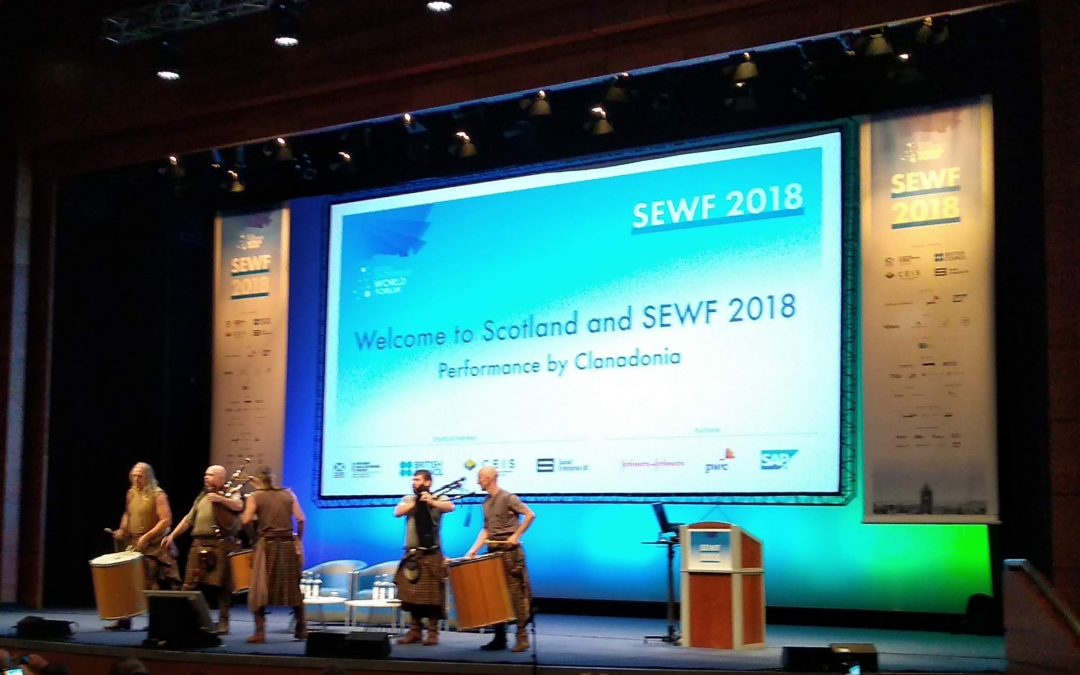
PSEN attended the Social Enterprise World Forum in Edinburgh last week. What an event! We’ll provide a fuller report of our experience and how the conference applies to Plymouth’s social enterprises at our network meeting on 25th September. A quick summary:
It was a fantastic, energising and stimulating week. Attended by over 1,400 people from nearly 50 different countries the event was a huge celebration of social enterprise alongside lots of politics, debate and discussion on many themes. It was chance to re-connect with old friends and make new ones. There was even some dancing at a Scottish ceilidh (less said about the attempts at this the better!)
We were able to share the work of many of our social enterprises in various events. We went to the launch of Callander as Scotland’s first social enterprise place. We also attended events on building strong networks; tech for good; marketing social enterprises; procurement and supply chain; the UN Sustainable Development Goals and more. Some salient points were:
1. There was an expressed need for more digital social enterprise businesses.
2. We need to create a compelling vision of a better future – one where social enterprise is the ‘norm’.
3. We need to engage with wider audiences (creatives, corporates, small businesses, public sector, schools, general population, etc) – we can’t just talk to ourselves.
4. The importance of political support – Scotland’s ministers seemed to really ‘get’ social enterprise and see it as integral to their economic strategies. This has led to investment and the development of a good ecosystem of support.
5. Getting large businesses to spend more with social enterprises – this will increase impact rather than putting money into CSR initiatives.
6. That social enterprise ‘structure’ and the ability to be held to account were seen as marginally more important than ‘impact’.
The most powerful moment was a brilliant talk by Bruktawit Tigabu of Whiz Kids in Ethiopia. The country struggles with low literacy and Bruktawit said that two thirds of young girls in the country think that domestic violence can be justified. A shocking statistic that illustrates why her work is so desperately needed. Ethiopia will host the 2019 Social Enterprise World Forum.
There was also a great talk by Lord Victor Adebowale, Chair of SEUK. He reminded us that as a sector we need to be more joined up. We need to make alliances in the social economy and with the private sector.
The SEWF reminded us that if we want to create a better future we need to lead or the future will be created for us. Social enterprises employ more women, people from Black and Minority Ethnic communities, young people. Social enterprises work in areas that need economic development. Social enterprises pay more fairly. We should be unashamed of this and we need to BE business. Not charity but business.

by Gareth | Jul 18, 2018 | Uncategorised
We need to talk about anarchism. Once you get past the often misleading, negative, bomb-chucking stereotypes of the proceeding centuries, many of the ideas contained within the, by definition, very broad church of anarchist thought are quite sensible. Indeed, in many cases emphasizing balance and moderation. They also have the potential to provide at least part of the answer to society’s infinitely complex growing list of challenges, from political disenfranchisement to growing inequalities, aging populations, environmental degradation and shrinking public services.
(more…)
